Emergency Room Simulator Treatment Procedures & Wound Care
Turn confirmed diagnoses into stable patients with hands-on ER interventions.
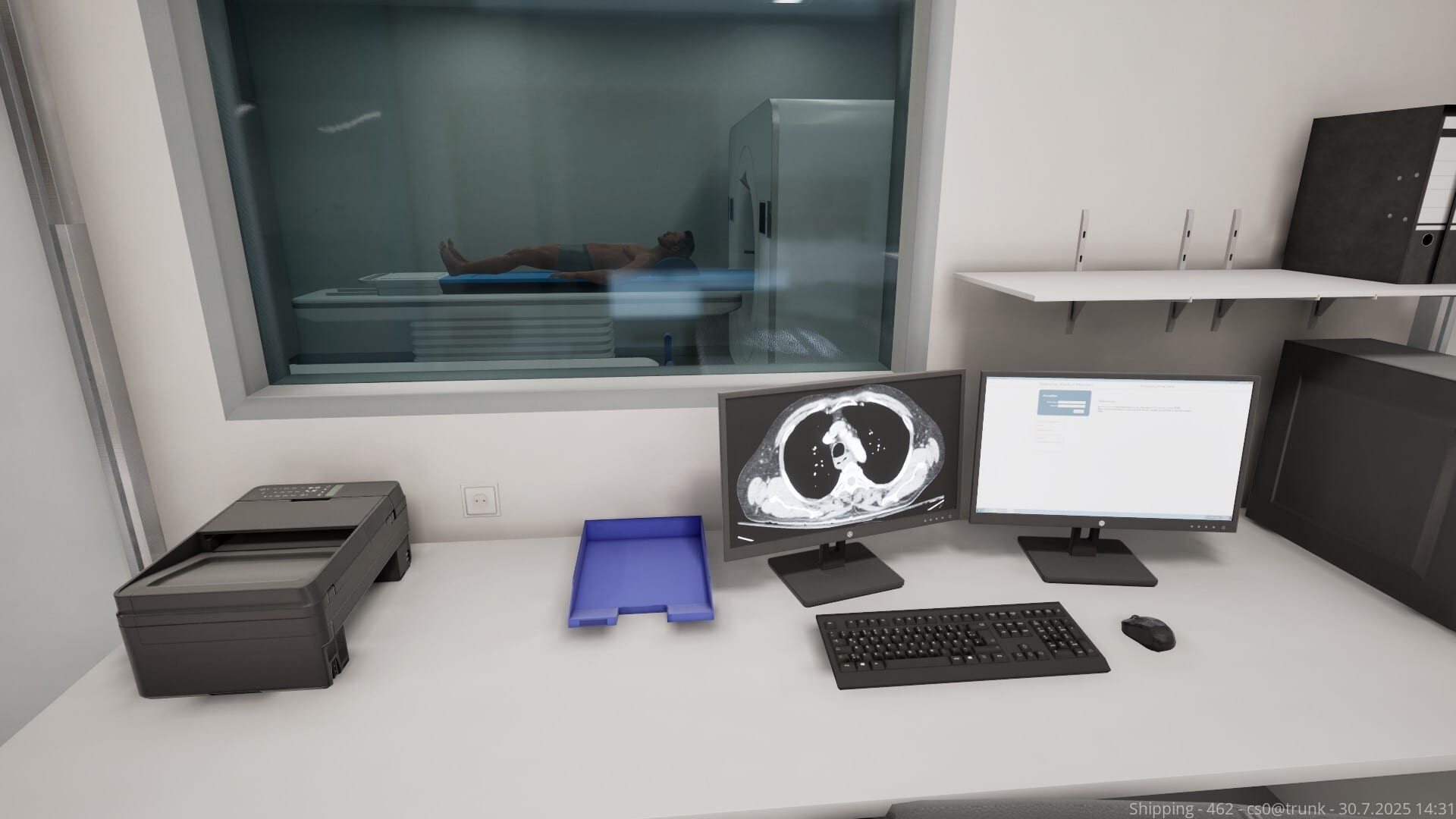
Aerosoft’s July 2026 Games Press release names a feature many diagnostic guides skip: Realistic Treatment Procedures — treat wounds, administer medication, and handle injuries using real medical workflows. Emergency Room Simulator is not a spreadsheet sim where you click “cure.” After you order tests in the diagnosis workflow and log results in the patient chart, you still must execute care with steady hands.
This guide explains how to prepare for procedure-heavy beats before August 13, 2026, how they differ from emergency procedures like CPR, and where treatment sits in the full first-shift loop.
Treatment vs diagnosis vs resuscitation
Three layers stack in official copy:
| Layer | Goal | Example |
|---|---|---|
| Diagnosis | Confirm problem | ECG, labs, imaging |
| Planned treatment | Stabilize and fix | Sutures, meds, dressings |
| Emergency rescue | Prevent death now | CPR, hemorrhage control |
Planned treatment usually happens when vitals are stable enough to work deliberately. Emergency rescue interrupts everything. Learn both, but do not confuse a calm laceration repair with a code blue.
Wound care and hemorrhage control
The official teaser on notaufnahme.aerosoft.com shows care from trauma bay first response through bedside treatment. Expect:
- Inspection — locate bleeding source before covering blindly
- Direct pressure — default first move for external hemorrhage
- Wound cleaning — may be a timed step before closure
- Closure — sutures, staples, or adhesive depending on scenario
- Dressing — bandage selection that affects later monitoring
Trauma cases tie directly to triage priorities: a bleeding patient may jump the queue even if another case looked worse on paper.
Medication administration
Steam and Aerosoft describe administering medication as part of realistic care. Until launch reveals exact UI, rehearse safe habits:
- Verify patient identity on screen before any drug click
- Match drug to diagnosis — wrong-route errors may be fail states
- Check allergies documented during history (see patient chart)
- Confirm dose units — mg vs mL confusion happens in real ERs too
- Reassess vitals after meds with onset time (nitro, analgesia, fluids)
Route types likely include IV push, infusion, IM, PO, and inhaled — map hotkeys early via PC controls or controller support.
Interactive procedure minigames
Official materials promise interactive procedures that test reflexes and judgment. Minigames may include:
- Steady-hand suturing along a guided path
- Syringe or IV setup with sequence checks
- Splint alignment for orthopedic injuries
- Burn dressing layers with correct order
When a minigame appears, read prompts once, then commit — hesitation often wastes more time than one wrong retry. If the sim allows practice modes post-launch, repeat until muscle memory matches shift prep checklist audio settings.
Documentation during treatment
Treatment without charting is incomplete care in simulation scoring. After each intervention:
- Log medication name, dose, route, time
- Note wound description before and after closure
- Record complications (failed suture, reaction)
Judges in your head — and possibly in-game scoring — ask whether another doctor could continue care from your notes alone.
Equipment you will touch
Procedures lean on tools covered in the medical equipment guide: monitors for vitals during sedation, imaging before invasive steps, and bedside trays for sterile fields. You do not need every machine for every wound, but know where the sim hides procedure kits versus diagnostic orders.
Pacing: calm procedures under waiting-room pressure
Dynamic gameplay means a quiet suture can explode into a code elsewhere. Official copy promises a mix of calm and sudden stress. Practical rule: finish life-threatening steps on your current patient first, then accept interruptions. If nurses call you away, use triage priorities to decide whether to abort mid-procedure.
Console vs PC procedure inputs
Full controller support on PC and simultaneous PS5 / Xbox Series X|S launch mean procedure minigames must work on sticks. Console players should read console controls and test sensitivity before hard shifts. PC players with shaky aim may prefer mouse for fine suturing if the game allows hybrid schemes.
Compare platforms in depth on the platform comparison page before buying hardware upgrades only for this title.
Pre-launch practice plan
Without a public demo, prepare conceptually:
- Walk through one fictional case: diagnose → treat wound → document
- List five drugs you expect to see (analgesia, fluids, antibiotics, insulin, epinephrine)
- Pair this guide with emergency procedures for when treatment fails
After launch, replay the first procedure-heavy scenario at half speed, then at full first-shift tempo.
Related wiki pages
- Guides hub — full reading order
- Pre-release preview — feature context
- Should you buy guide — platform and timing decisions
- Release roadmap — August 13, 2026 launch
Frequently Asked Questions
Quick answers to the most common questions.
Are treatment procedures separate from CPR?
Yes. CPR and resuscitation are covered in the [emergency procedures guide](/guides/emergency-procedures/). This page focuses on planned wound care and medication after diagnosis.
Does the game show realistic gore?
Expect medical injury themes. Check store age ratings before purchase. Official marketing emphasizes realism, not gratuitous shock.
Will procedures fail if I misclick?
Interactive procedure language suggests mistakes matter. Exact fail rules will be confirmed after launch.
Where is official footage of treatments?
The release teaser on the [official links](/links/) page shows trauma bay tone but limited mechanic detail. We update this guide when gameplay trailers ship.